Why Every Saudi Company Needs a Structured Annual Training Plan
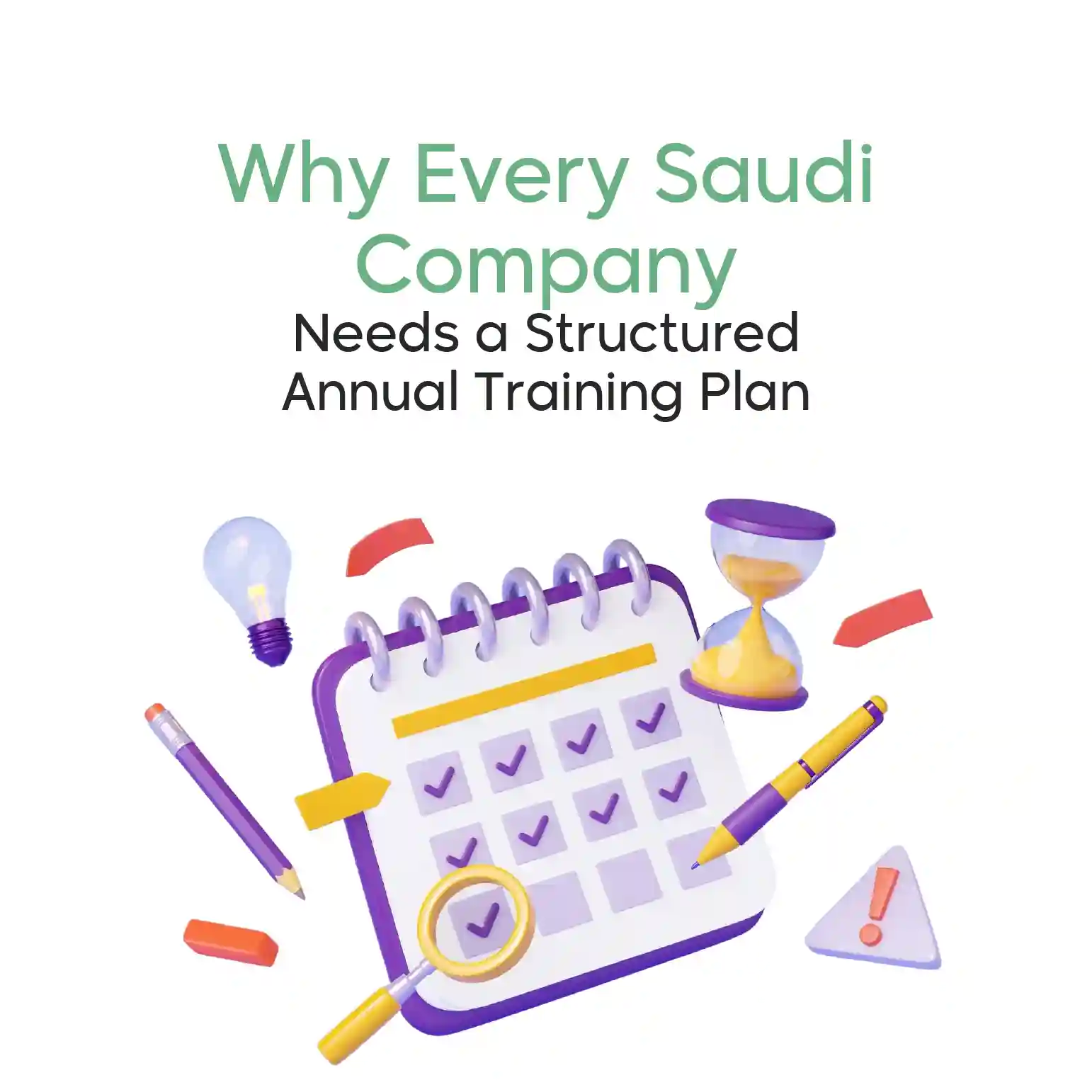

In today’s rapidly evolving business environment, Saudi companies are under growing pressure to stay competitive, compliant, and future-ready. As industries transform and job roles evolve, organizations can no longer rely on ad-hoc learning or one-time workshops. Instead, success increasingly depends on having a clear annual training plan that aligns people, performance, and business goals.
A well-designed annual training plan in Saudi Arabia is more than an HR requirement it is a strategic investment in workforce performance, employee retention, and long-term organizational growth. Companies that take a structured approach to learning consistently outperform those that treat training as an afterthought.
This article explores why every Saudi organization regardless of size or sector needs a structured employee training strategy and how it supports sustainable business success.
An annual training plan is a structured roadmap that outlines the skills, knowledge, and competencies employees need to develop over a 12-month period. Rather than reacting to skill gaps as they appear, organizations proactively plan training aligned with business priorities.
In Saudi Arabia, where Vision 2030 is reshaping industries such as tourism, logistics, healthcare, digital services, and renewable energy, workforce readiness has become a national priority. Companies that invest in long-term skill development are better positioned to adapt to regulatory changes, technology shifts, and market demands.
A strategic training roadmap ensures learning is intentional, measurable, and directly linked to performance outcomes.
Many organizations still rely on occasional courses or last-minute training when issues arise. While this may address immediate needs, it rarely delivers lasting impact.
Challenges of unstructured training include:
Without a clear HR training strategy, learning becomes fragmented and reactive. A structured annual approach, on the other hand, creates continuity and purpose across all training initiatives.
Effective workforce planning requires anticipating future skill requirements, not just responding to current ones. A structured annual training plan helps HR and leadership teams identify:
By mapping training initiatives to workforce planning objectives, companies reduce talent gaps and improve internal mobility. Employees are prepared for future roles, minimizing reliance on external hiring.
This approach supports both organizational stability and employee career growth.
Employees perform better when they feel supported, valued, and equipped to succeed. A clear employee training strategy sends a strong message: the company is invested in its people.
Benefits of structured yearly training include:
When employees understand how their training fits into a broader development plan, they are more motivated to apply what they learn. Over time, this leads to a more capable and accountable workforce.
One of the biggest advantages of an annual training plan is its focus on long-term skill development rather than short-term fixes.
Instead of isolated courses, employees progress through learning stages:
This progression allows skills to compound over time, delivering measurable improvements in performance. It also ensures that training keeps pace with evolving job requirements, especially in fast-changing sectors across Saudi Arabia.
Institutes like Dimois Training Institute design programs that support structured skill development aligned with real workplace needs. Their corporate training solutions help organizations build sustainable learning frameworks rather than one-off sessions.
Training budgets are often scrutinized, especially during periods of growth or uncertainty. A structured annual plan helps organizations maximize return on investment by:
When learning is planned in advance, organizations can allocate budgets more strategically and demonstrate clear business value from training initiatives.
While all organizations can benefit, structured training is especially valuable for:
Businesses expanding their workforce need consistent onboarding, skills alignment, and leadership development to maintain quality and culture.
Sectors such as healthcare, finance, construction, and safety-sensitive environments require continuous compliance and competency training.
Companies involved in national transformation projects need future-ready skills aligned with evolving industry standards.
Structured training helps smaller organizations professionalize operations and build leadership pipelines internally.
A successful annual training plan typically includes:
Partnering with a trusted training provider simplifies this process. Dimois Training Institute supports organizations in designing customized training roadmaps aligned with business goals, industry needs, and Saudi workforce standards.
1. What is an annual training plan?
An annual training plan is a structured document that outlines employee learning and development activities for a full year. It aligns training initiatives with organizational goals, skill requirements, and workforce planning needs.
2. How does yearly training reduce skill gaps?
Yearly training allows organizations to identify current and future skill gaps in advance. By following a structured roadmap, employees develop required competencies gradually, reducing performance gaps and improving overall productivity.
3. Which companies benefit most from structured training?
All companies benefit, but structured training is especially valuable for growing organizations, regulated industries, SMEs, and companies aligned with Vision 2030 initiatives. It ensures consistent performance, compliance, and workforce readiness.
In a competitive and fast-changing economy, training cannot be left to chance. A structured annual training plan in Saudi Arabia enables organizations to build capable teams, reduce skill gaps, and achieve sustainable growth.
By adopting a strategic employee training strategy, companies move from reactive learning to purposeful development creating a workforce that is confident, skilled, and ready for the future.
If your organization is ready to design a practical, results-driven training roadmap, partnering with an experienced institute like Dimois Training Institute can make the journey smoother and more impactful.
Invest in your people today and build the skills your business will rely on tomorrow.
Companies that plan employee training strategically don’t just react to change they lead it with a future-ready workforce.